You bought a hill plot intending to put up a homestay. The pitch was simple: build a six-room property, list on Airbnb / MMT / GoIbibo, earn passive income from the Delhi NCR weekend traffic and the international yoga circuit. The numbers in the brochure looked fine. They almost always do. Before you spend a rupee on construction, three regulatory and operational realities decide whether your project actually returns — or quietly bleeds.
Reality 1 — The Uttarakhand homestay scheme has a 6-room cap, and it expects you to live there
The Deendayal Upadhyaya Home Stay scheme — the framework most Uttarakhand homestays operate under — permits a minimum of one and maximum of six rooms per registered homestay. The owner is expected to reside on premises with family. Some districts and sub-schemes are stricter, registering only owners who are permanent local residents.
If you are a Delhi NCR investor with a day job in Gurgaon, this is the regulatory wall. You either:
- Restructure as a boutique resort / homestead-classified hotel (out of the homestay scheme), accept the higher compliance — fire NOC, pollution NOC, commercial water & electricity tariff, FSSAI, GST — and unlock a higher room count and a manager-operated model.
- Hand operations to a local resident-partner who registers as the homestay owner. This is workable but legally and commercially messy unless documented properly.
- Operate at 4–6 rooms with periodic personal residence — week per month, every long weekend — and keep the homestay registration clean. This is what most successful NCR-owned homestays in Bhimtal, Mukteshwar and Lansdowne actually do.
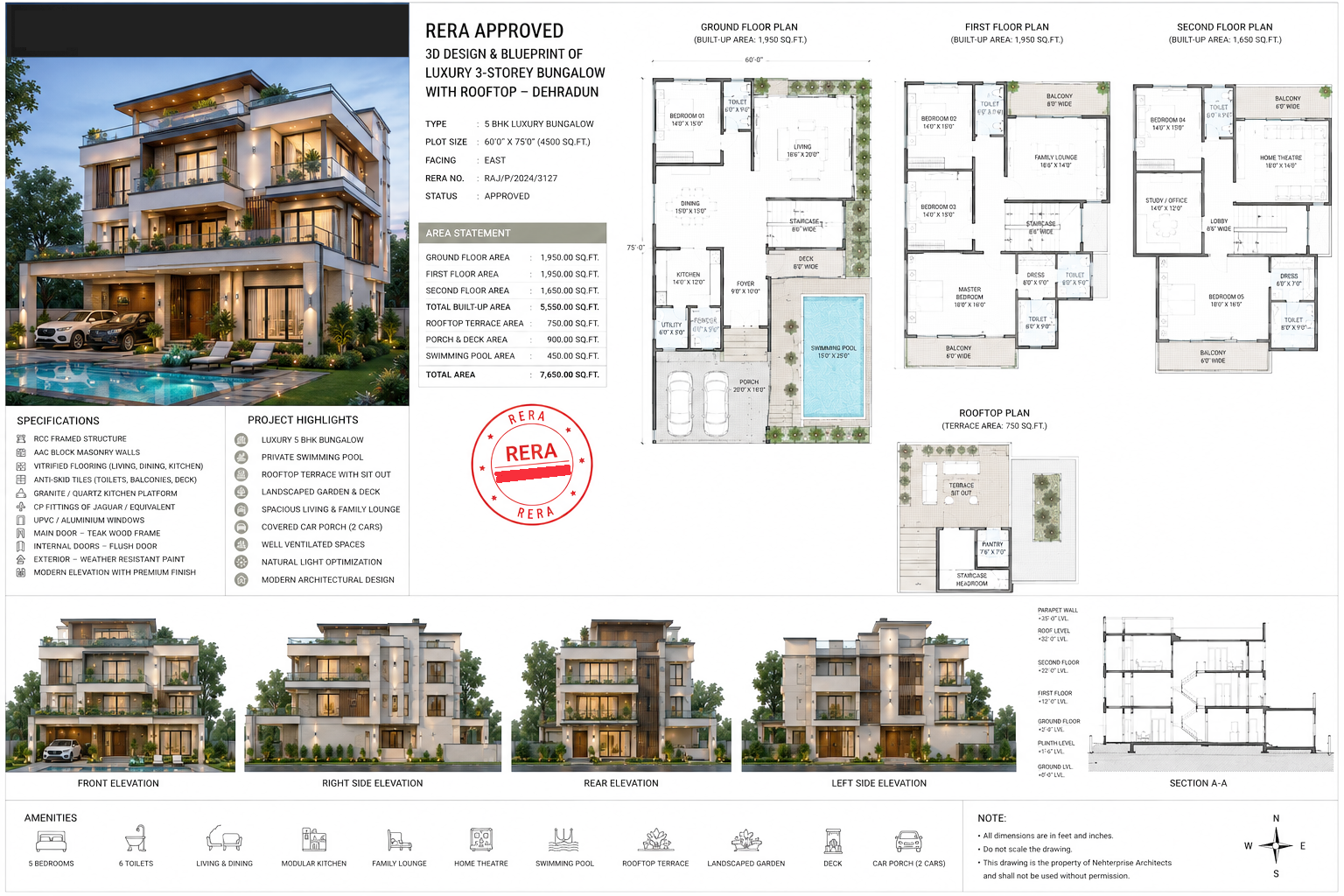
The choice has architectural consequences. A homestay-cap building maxes at 6 rooms, a private suite for the owner, and a shared kitchen. A boutique resort is 8–14 rooms, a full F&B kitchen, a small back-of-house, an SOP-driven housekeeping model. The two are not the same building. Decide before you draw a line.
Reality 2 — Occupancy assumptions
The brochure will quote 70 % annual occupancy. The real number, across mid-tier Uttarakhand homestays we've designed or audited, is closer to 38–55 % when averaged across the year. The seasonality is brutal:
- April–June and September–November: 70–90 % on weekends, 35–55 % on weekdays
- July–August (monsoon): 20–40 % even with discounts
- December–February (winter): 25–55 % depending on snow / accessibility
- March: variable, depending on Holi and school holiday calendar
Average daily rate (ADR) for a well-designed boutique 2-BHK suite in the Bhimtal / Mukteshwar / Pangot belt sits at ₹4,500–9,500 in season, ₹2,200–4,500 off-season. A 6-room homestay with a 45 % annual occupancy averages ₹38–58 lakh annual gross revenue. Operating costs run 35–55 % of revenue. Net before financing typically ₹14–28 lakh on a property that cost ₹1.4–2.5 crore to build, ex-land.
Translate that to ROI: 5–14 % gross yield, 3–9 % net before financing. Not the 20 % the brochure promised — but better than the long-term yield on a residential rental in Delhi NCR, and with a meaningful land-value upside if the area densifies.
Reality 3 — Architecture decides the ADR
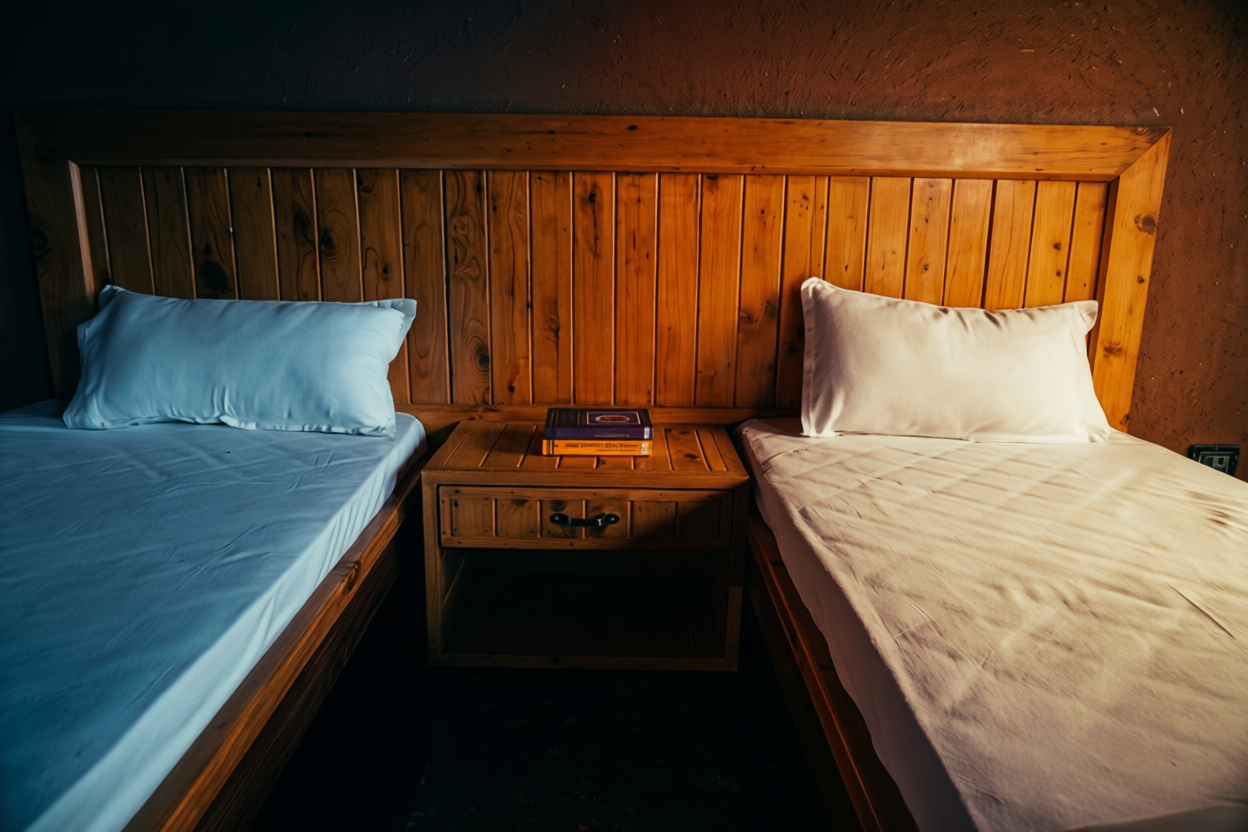
The single biggest driver of ADR on a Uttarakhand homestay or boutique stay is not the location — it's the room design. A standard 280 sq ft “hill cabin” with a bed and a window earns ₹3,500. A 320 sq ft suite with a 2.4 m verandah, a daybed at the window, a soaking tub on a sunlit terrace, and a real fireplace earns ₹7,500. The construction cost difference between the two is roughly ₹6–8 lakh per room.
The math: the upgraded suite recovers the additional ₹6–8 lakh investment in 14–22 months, then yields 2× the baseline forever.
What earns the ADR uplift, in our experience, is the same vocabulary we cover in detail in our Kumaoni-Garhwali vernacular blog:
- Deep verandahs (2.4 m) on every room so monsoon-season guests can still sit outside
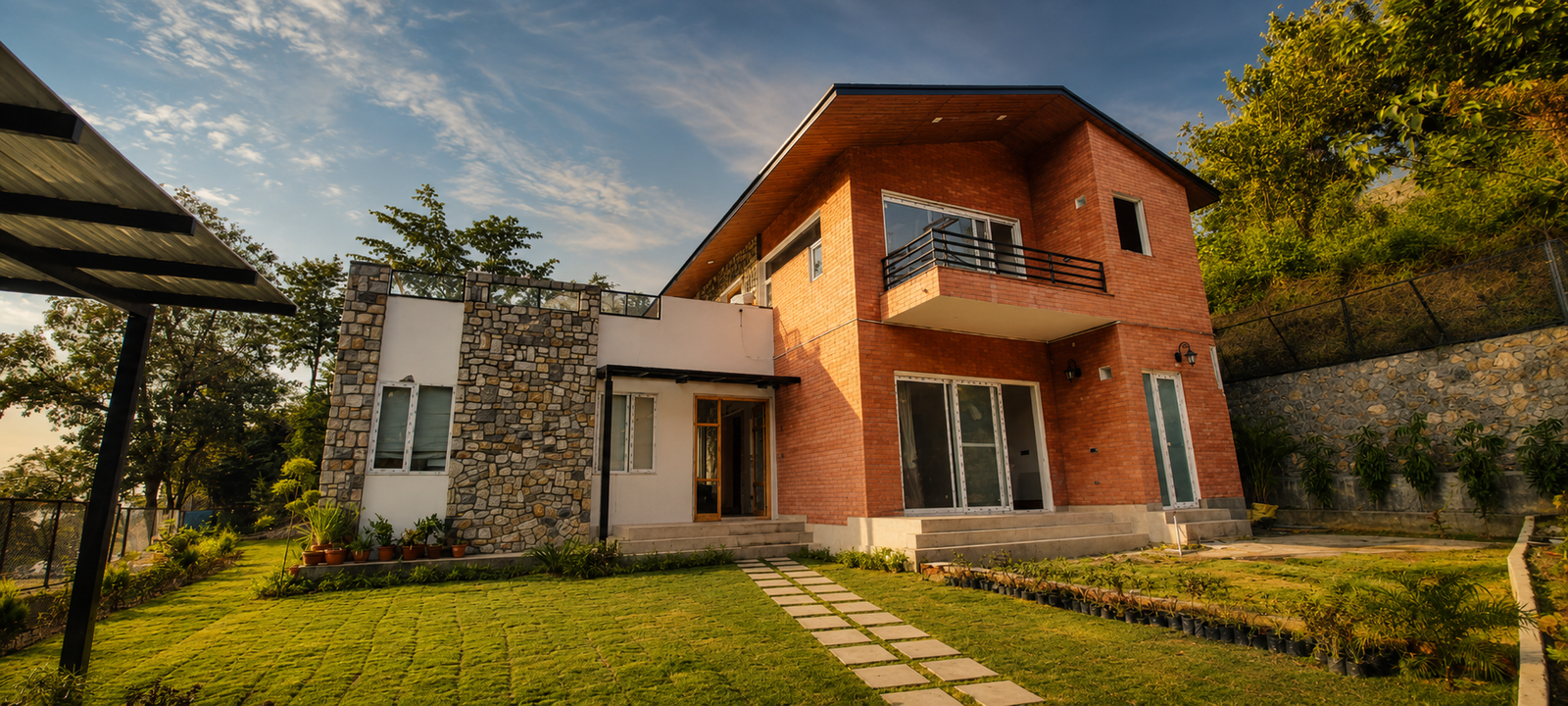
- Local stone-and-slate detailing — the property feels “of the hill”, not generic
- A real fireplace, not a TV-mounted electric one
- A bathtub with a window (the most photographed feature in any boutique listing)
- A private outdoor seating zone per room
- Sunrise / sunset orientation in writing
Architecture decides which guest the property attracts. The wrong design attracts the price-sensitive guest; the right design attracts the photographer.— Mrs. Tulika Sharma, Senior Designer
What the architectural set actually needs to include for a hospitality property
- Building plan + structural set under BIS 2025 seismic compliance
- Fire NOC drawings (compulsory above 500 sq m, and any building with sleeping accommodation above ground floor)
- Pollution control sign-off for kitchen and waste
- RERA-ready set if you plan to sell rooms or share-of-stay — covered in our RERA blog
- Wet-area waterproofing detail (the single most common warranty failure on hill hospitality)
- Back-of-house plan: housekeeping store, linen, kitchen, laundry, staff toilet — usually the missing piece in homestay-only designs
- Public area programme: reception, lounge, F&B (if applicable), wellness room (if applicable)
- Operating manual at handover, not just a maintenance binder
Where this matters if you bought the plot from Delhi NCR
Most NCR buyers we meet purchased the hill plot before deciding whether to live in it, rent it, or run hospitality from it. The decision changes the building. Our second-home playbook covers the first decision conversation. If the answer is hospitality, this blog is the second.
The single biggest cost mistake we see is a buyer who designs a 6-room homestay, builds it, then realises after handover that they want a 12-room boutique resort instead. The retrofit cost is roughly 1.7× the original build.
Mrs. Tulika Sharma, Senior Designer · Mr. Hitesh Sharma, Business Head (MBA, 15 years construction) · Dios Design, Rajpur Road, Dehradun. If you're at the should-it-be-homestay-or-resort fork, WhatsApp +91 84334 28590. The first feasibility conversation is on us.
Frequently asked questions
What is the maximum number of rooms allowed in a registered Uttarakhand homestay?
Six. The Uttarakhand homestay scheme permits a minimum of one and maximum of six rooms per registered homestay. The owner is expected to reside on premises with family. Some districts and sub-schemes are stricter, registering only owners who are permanent local residents.
Can I run a homestay in Uttarakhand if I live in Delhi NCR?
Technically the homestay scheme expects owner residence. Many NCR investors get around this by structuring as a boutique resort or homestead-classified hotel (outside the homestay scheme), or by registering a local resident-partner. The decision changes the building you should build. Talk to your architect before construction begins.
What ADR and occupancy can I expect for a boutique stay in Uttarakhand?
In Bhimtal, Mukteshwar, Pangot and similar belts, a well-designed 2-BHK suite earns INR 4,500-9,500 in season and INR 2,200-4,500 off-season as ADR. Average annual occupancy across mid-tier properties is 38-55 percent. A 6-room property with 45 percent occupancy averages INR 38-58 lakh annual gross revenue.
What is the realistic ROI on a Uttarakhand boutique stay in 2026?
Roughly 5-14 percent gross yield and 3-9 percent net before financing on a property that cost INR 1.4-2.5 crore to build. Not the 20 percent the brochure promises, but better than long-term Delhi NCR residential rental yield, and with material land-value upside.